
How Water Eject Sounds Work: The Acoustic Physics Behind Speaker Moisture Expulsion
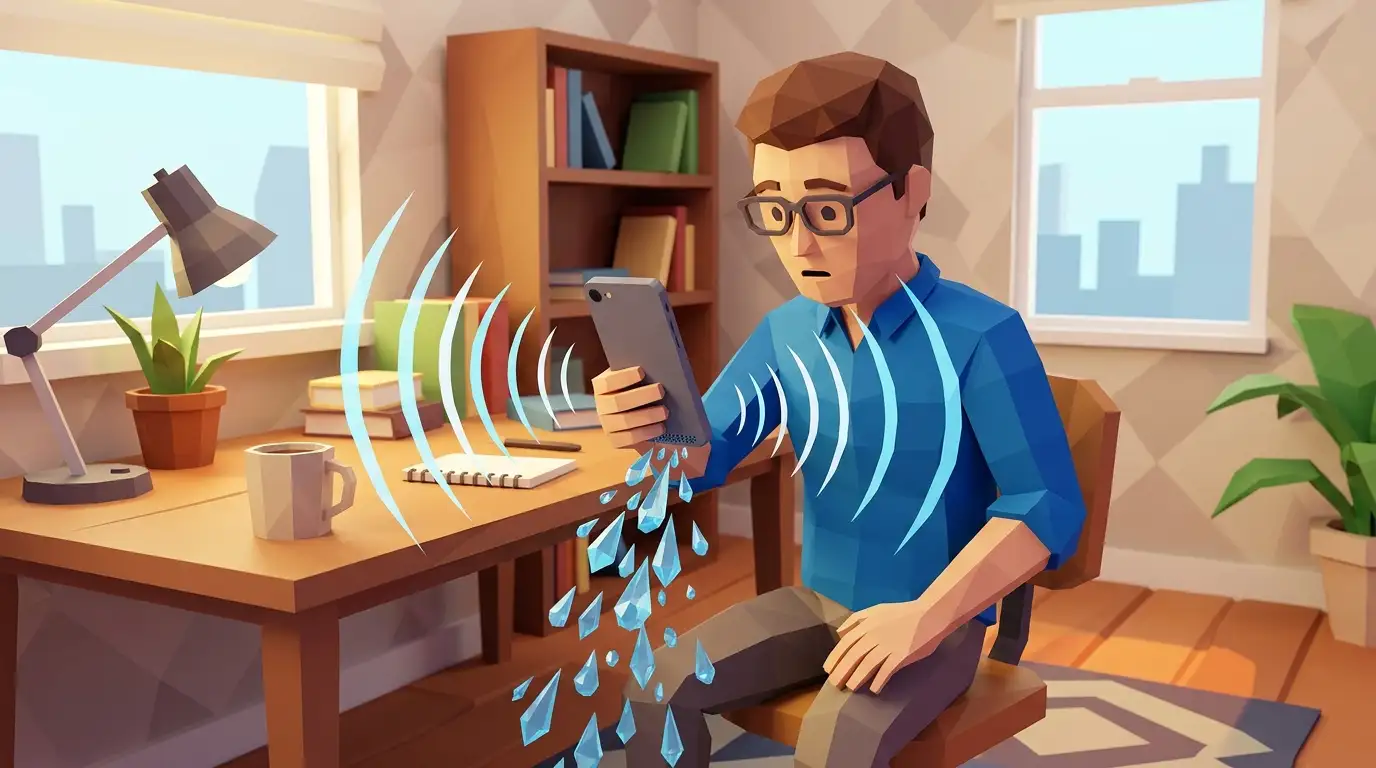
- Low frequencies (around 130 Hz - 250 Hz) generate maximum physical diaphragm displacement without overheating phone voice coils.
- Surface tension traps micro-droplets in micro-perforated speaker mesh; acoustic pressure waves overcome this capillary adhesion.
- Sound works exclusively on speaker acoustic cavities and cannot dry internal logic boards or charging connectors.
- Positioning your smartphone speaker grille downward allows gravity to cooperate with acoustic air pressure pulses.
When liquid enters a smartphone speaker opening, it typically does not flood the entire phone immediately, thanks to internal hydrophobic mesh gaskets. However, surface tension and capillary action trap tiny water droplets across the speaker grille holes, obstructing airflow and rendering audio muffled or completely silenced.
A speaker works by moving an internal diaphragm back and forth via an electromagnet voice coil. Under normal speech or music playback, frequencies vary rapidly across thousands of Hertz, resulting in rapid but microscopic movements.
Water ejection utilities utilize resonant frequencies—typically between 130 Hz and 250 Hz, with pulses around 165 Hz. At these low frequencies, the speaker diaphragm undergoes its maximum mechanical displacement (excursion) for a given power level. The diaphragm acts essentially as a micro-piston, displacing small air volumes forcefully through the grille.
When repeated in periodic pulses, this air displacement breaks the surface tension holding the water droplets in the perforated mesh. When paired with gravity (holding the device face-down), the droplets are ejected outward rather than pushed inward.
Crucially, audio cannot repair corrosion, restore damaged electrical contacts, or remove moisture trapped inside sealed USB-C or Lightning charging ports. It is an acoustic mechanical aid for speaker cavities only.
Research References & Fact Check Sources
Our technical guides adhere strictly to official hardware manufacturer standards. We do not recommend unverified methods or home remedies that void warranties.
- Apple Inc.
- Mozilla / W3C
Related Tools & Diagnostic Guides
Continue troubleshooting your device with recommended next steps